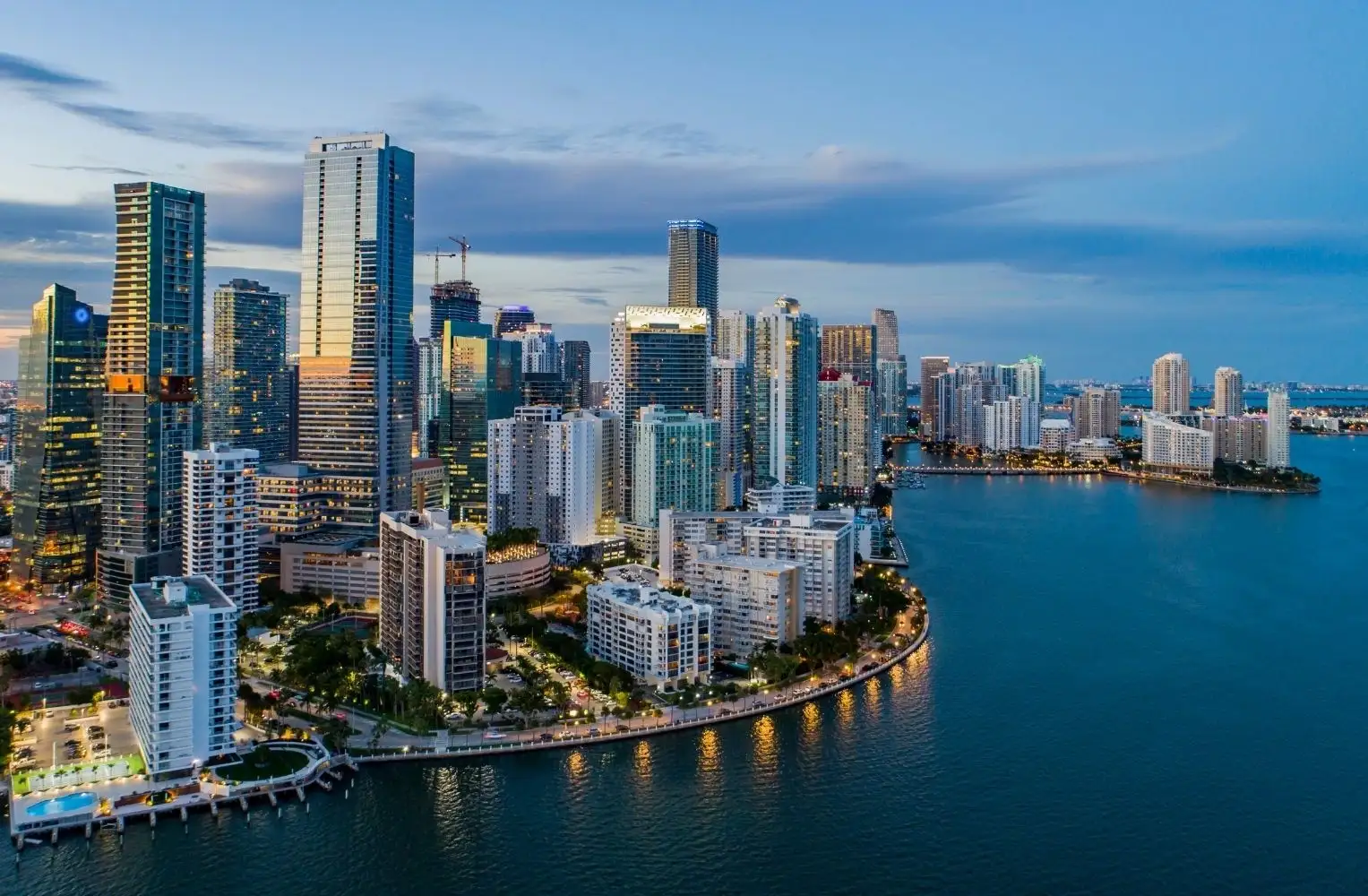
Miami’s luxury condo market opened 2026 on a strong note. Q1 closed with 424 sales — the highest first-quarter volume outside the pandemic-era spike — representing a 15.2% year-over-year increase. The median sale price reached $1.84 million, up 2.3% from Q1 2025, while the median price per square foot settled at $1,040, now widely considered the baseline for true luxury inventory.
What that data tells a Latin American investor is straightforward: demand is real and broadening, not a flash of post-pandemic speculation. The buyer pool has diversified across nationalities and investment strategies, and certain neighborhoods are pulling ahead of the rest in both pricing velocity and absorption speed.
This guide covers six of those neighborhoods in detail. Each section includes current price benchmarks, rental data, and a realistic investor profile, so you can match the right zone to your actual strategy rather than chasing the loudest name on the market.
| Neighborhood | Median price/sq. ft. (Q1 2026) | Avg. asking price | YoY sales growth |
|---|---|---|---|
| Brickell | $950 (record high) | $455K–$900K+ | Steady |
| Edgewater | $639 | $699K (median) | +120% |
| Coconut Grove | ~$1,500 (dry-lot) | $900K–$4M | Highest combined growth |
| Sunny Isles Beach | $1,200–$2,400+ | $1M–$6M+ | Strong |
| Coral Gables | ~$890K avg. | $750K–$2.5M | Leading absorption speed |
| Downtown Miami | $730 | $600K–$2M | +15.2% overall market |
Sources: CondoBlackBook Q1 2026 Luxury Condo Market Summary; MiamiResidence MLS data; RentCafe June 2026.
Brickell: record prices and the densest rental demand in Miami
Brickell hit a record-high $950 per square foot in Q1 2026, the highest the neighborhood has ever posted in the luxury segment. That number matters because it arrives alongside sustained rental demand: a typical 2-bedroom in a newer Brickell tower lists at $4,000–$7,000 per month, and the concentration of financial firms, tech companies, and multinational offices keeps occupancy tight.
The case for Brickell has not changed structurally, but the price has moved. A 2-bedroom condo from a reputable developer now runs $630,000–$900,000 on the mid-range, with newer high-design towers pushing well past $1.5 million for comparable square footage. Investors who bought pre-construction here three or four years ago are sitting on meaningful appreciation.
For buyers entering today, the question is cash flow vs. capital gains. Annual rents in Brickell averaged $3,781 per month across all unit types as of June 2026 (RentCafe/Yardi Matrix data), which makes the gross yield on a $700K purchase roughly 6.5% before HOA and taxes. Net yield depends heavily on building fees, which vary considerably. Buildings that allow short-term or monthly rentals command premiums but also carry higher management overhead.
Who buys here: Latin American professionals and executives who use the unit part-time while generating income, and investors seeking a liquid, dollar-denominated asset in a market they understand. Brickell remains the easiest Miami neighborhood to rent out and, when the time comes, to sell.
Edgewater: the market with the fastest-growing transaction volume
The numbers on Edgewater in Q1 2026 are hard to ignore. Closed sales jumped 120% year over year — 44 transactions versus 20 in Q1 2025. No other Miami neighborhood came close to that growth rate. The median asking price sits around $699,000, with an average across active inventory closer to $1.2 million, and new construction is priced at roughly $639 per square foot.
A publicly reported 49-story, approximately 430-unit project near 500 NE 24th Street is among the launches expected to begin sales in 2026, adding to an already expanding inventory base. That level of development signals that institutional capital views Edgewater’s fundamentals as solid — it is not speculative momentum, it is developers responding to absorption.
On the rental side, average rents in Edgewater run wide: roughly $2,150 to $27,500 per month depending on unit size, floor, and view corridor. The practical midpoint for a 2-bedroom in a newer building is closer to $4,000–$5,500. For investors willing to do the homework on building selection, the comparison between Brickell and Edgewater entry points reveals a meaningful price-per-square-foot gap that rewards early positioning.
Who buys here: Buyers who want bayfront access and newer product at a lower per-square-foot cost than Brickell or Miami Beach. Dual-use investors — primary or second residence that also leases when not in use — find Edgewater’s inventory range and leasing flexibility appealing.
Coconut Grove: the strongest combined price appreciation in Q1 2026
Coconut Grove and Coral Gables together posted the highest year-over-year price gain in Miami’s luxury segment during Q1 2026 at 9.2%, the fastest days on market, and the lowest inventory levels relative to demand. Within the Grove specifically, condo appreciation has been sharp: Park Grove units that averaged $1,700 per square foot in 2021 have resold at up to $3,850 per square foot in recent transactions.
That trajectory matters for investors because it is supply-driven, not hype-driven. Coconut Grove has roughly 10% condo inventory and 90% single-family homes. When a quality condo building comes to market, there are very few substitutes. The boutique developments that have come online in recent years — low-rise, high-finish, with direct access to parks and marinas — have found buyers at prices that would have seemed aggressive just three years ago.
Rental demand here skews long-term. The neighborhood draws families in part because of its proximity to Ransom Everglades School, Carrollton School of the Sacred Heart, and other top private institutions. Tenants who rent to be near those schools tend to sign multi-year leases, which simplifies management for foreign owners.
Average rents in northeast Coconut Grove sit around $1,635 per month across all inventory (RentCafe data), but that figure reflects the full market including older and mid-range units. Luxury apartments in new boutique buildings in the Grove rent at a significant premium above that average.
Who buys here: Families looking for a primary or second home near strong schools, and investors seeking low-inventory appreciation with a long-term tenant base.
Sunny Isles Beach: branded residences and the highest price ceilings
Sunny Isles Beach is where price per square foot reaches its highest levels outside of Fisher Island. The branded towers along Collins Avenue — Armani/Casa Residences, Porsche Design Tower, The Ritz-Carlton Residences — price at $1,200 to $2,400 or more per square foot depending on floor and view exposure. Penthouses and full-floor units in these buildings transact at $10 million to $30 million.
For investors at this tier, the yield calculus is different. Long-term annual rentals in branded buildings typically produce 2–4% net yield, lower than Brickell or Edgewater. The case for Sunny Isles is capital preservation and appreciation in a scarcity-constrained market, not monthly cash flow. The supply of oceanfront land in this corridor is finite and no new land is being created.
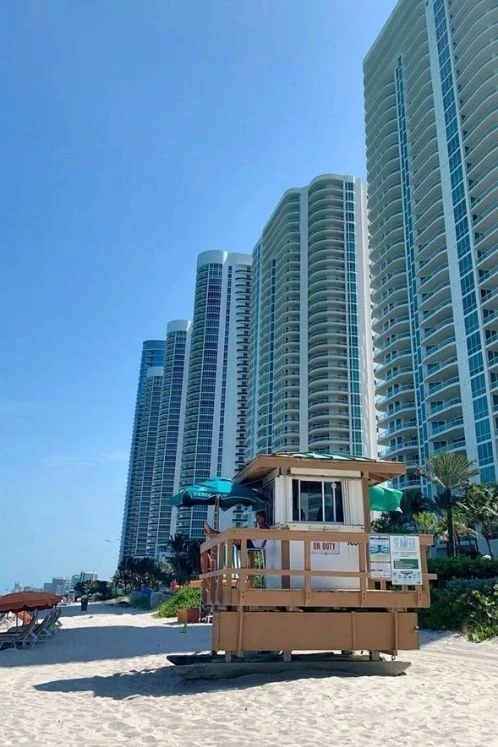
One practical note for foreign buyers: buildings in Sunny Isles Beach tend to have strict rules around rental periods. Some permit only annual leases; others allow seasonal rentals to qualified tenants. Understanding those rules before making an offer is essential, and it is one of the areas where working with an agent who specializes in foreign national transactions saves significant time and avoids structural mismatches between your investment strategy and the building’s policy.
Who buys here: High-net-worth investors who prioritize status, capital protection, and the long-term appreciation profile of a globally recognized brand address.
Coral Gables: fastest absorption and consistent family demand
Coral Gables and Coconut Grove share the Q1 2026 leadership position on absorption speed and price appreciation among the neighborhoods tracked by CondoBlackBook. Average condo prices in Coral Gables cluster around $890,000, with new boutique developments in the $750,000–$2.5 million range.
The University of Miami generates a specific demand segment that is unusually stable: faculty, researchers, and administrative professionals tend to stay for multi-year terms and often convert from renters to buyers. That base combines with the family market anchored by the area’s private and public school options to create demand that does not track closely with interest rate cycles.
For investors, the key risk in Coral Gables is liquidity. This is not a market where you can sell a luxury condo in 30 days if circumstances change. Days on market here run longer than Brickell or Edgewater because the buyer pool is narrower and more specific. That narrowness is also what protects values: the buyers who want Coral Gables specifically are not easily redirected to another neighborhood.
Who buys here: Investors who want long-term appreciation with a stable tenant base, and families for whom the school and university proximity is the primary driver.
Downtown Miami: the most affordable entry into the luxury segment
Downtown Miami’s median price per square foot in Q1 2026 was $730 — the lowest of any neighborhood in this guide and the only entry point under $800 in the luxury condo segment. For investors working with a $600,000–$900,000 budget who want exposure to a central Miami address, Downtown offers more square footage per dollar than any comparable zone.
The investment thesis for Downtown has shifted in the last two years. The Brightline high-speed rail terminal at MiamiCentral now connects directly to Fort Lauderdale and West Palm Beach, with service to Orlando expected to expand ridership further. That infrastructure addition changed the demand profile for short-term and monthly rentals: business travelers who previously needed a car now have direct rail access from the terminal to their building.
Rental occupancy rates in Downtown remain high due to its concentration of cultural venues — the Adrienne Arsht Center, Pérez Art Museum Miami, the Kaseya Center — and its proximity to both airport and port. Monthly rentals to extended-stay business travelers produce better yields here than in most other zones. The tradeoff is that the building stock is older on average than Edgewater or Brickell, and the street-level experience is still uneven.
Who buys here: Investors seeking the highest yield relative to purchase price, and those who want liquidity and central access over prestige address.
What foreign investors need to know about buying in 2026
Miami’s luxury condo market in 2026 is a buyer’s market in one specific sense: inventory is higher than it was during 2021–2023, sellers have more competition, and buyers willing to do proper due diligence can negotiate on closing costs, repairs, and timelines. That does not mean prices are falling broadly — the data does not support that reading — but it does mean the negotiating dynamic has normalized from the zero-leverage environment of two years ago.
For Latin American buyers specifically, a few structural factors matter:
Currency protection. A dollar-denominated asset in a state with no income tax is still one of the cleanest ways to hedge against local currency devaluation. Florida’s tax structure — no state personal income tax, no state capital gains tax — means the net return on a rental property is higher than in most U.S. states.
Financing is available. Banks serving foreign nationals in 2026 generally require 30–50% down payment, along with passport, proof of funds, income certification from a local accountant, and bank references. The process is slower than for U.S. residents but it is not prohibitive. Rates have come down from their 2023–2024 peaks, which has reopened the leveraged-purchase calculus for some investors who were previously buying cash only.
HOA and insurance costs have risen. Florida’s property insurance market has been under pressure for several years, and post-Surfside inspection laws have triggered special assessments in some buildings. Before making any offer, reviewing the building’s financials, reserve fund status, and any pending assessments is non-negotiable due diligence. A building that looks attractively priced on a per-square-foot basis may carry monthly costs that compress your net yield significantly.
Closing costs run 2–5% above the purchase price, covering title insurance, legal fees, and recording taxes. For a $1 million purchase, budget $20,000–$50,000 in closing costs in addition to your down payment.
LLC structuring is worth the conversation. Holding a U.S. property in your personal name exposes your estate to federal estate tax above certain thresholds. A properly structured LLC can address that exposure, provide privacy, and simplify the process when the time comes to transfer or sell. This is standard practice for international buyers and worth discussing with a real estate attorney before you sign anything.
Frequently asked questions
Do I need a visa to buy property in Miami?
No. Property ownership in the U.S. does not require a visa and does not confer immigration rights. You can purchase as a tourist, as a non-resident, or through a legal entity. If your goal is a path to residency, certain investor visa categories (E-2, EB-5) exist, but they operate on different requirements than real estate purchase. An immigration attorney can clarify what applies to your situation.
What is the realistic rental yield on a luxury apartment in Miami right now?
It depends on the neighborhood and building. In Brickell and Edgewater, well-selected 2-bedroom units in newer buildings are producing gross yields of 5–7% annually. Net yields, after HOA, insurance, and property tax, typically land in the 3–5% range. Sunny Isles branded buildings run lower (2–4% net) because the entry price is higher. Short-term rental-permitted buildings can push yields higher but require active management or a specialized property management company.
How long does the purchase process take for a foreign buyer?
A cash transaction in Miami can close in 30–45 days once all documents are in order. Financed transactions typically run 60–90 days. The main variable for foreign buyers is document assembly — proof of funds, income certification, and bank references can take time depending on your home country’s financial system. Starting that process before you identify a specific property saves significant time later.
Is an LLC actually necessary for a foreign investor?
It is not legally required, but it is widely recommended by real estate attorneys working with international clients. The main benefits are estate tax mitigation, liability protection, and privacy. The main drawback is setup cost (typically $1,000–$2,500) and annual maintenance fees. For purchases above $500,000, most attorneys advise using an LLC. For smaller purchases where the buyer intends to use the property personally for extended periods, the analysis is more nuanced.
What neighborhoods are currently seeing the strongest price appreciation?
Based on Q1 2026 data from CondoBlackBook, the combined Coconut Grove/Coral Gables market posted the strongest price-per-square-foot appreciation at 9.2% year over year. Edgewater led on transaction volume growth at 120%. Brickell hit its highest-ever price per square foot at $950. Fisher Island posted the most dramatic appreciation of any single micro-market at 19%, but its transaction volume is too small to use as a general benchmark.
If you are evaluating a specific neighborhood or want to understand how your investment budget maps to current inventory in Miami, the most useful next step is a direct conversation about your numbers and your timeline.
Reach out to the Florida HomeGroup Realty team for a personalized consultation — no cost, no commitment, and all the context you need to move with confidence.