Miami’s luxury real estate market in 2026 is not moving in one direction. It is splitting. At the top of the market, scarcity-constrained waterfront, island communities, and branded towers are holding or rising in value. In the mid-tier and oversupplied condo segments, prices are under pressure and days on market have lengthened. For foreign investors, that divergence is the most important thing to understand before choosing a neighborhood.
This guide covers the five areas where the fundamentals for high-end property remain strongest: Fisher Island, Sunny Isles Beach, Coconut Grove, Brickell, and Coral Gables. Each section includes current price benchmarks drawn from Q1 2026 market data, realistic carrying cost estimates, and a direct assessment of who each neighborhood actually suits.
| Area | Median price / avg. $/sq. ft. | YoY appreciation | Key data point |
|---|---|---|---|
| Fisher Island | $9.5M median / ~$3,400/sq. ft. | +19% (price/sq. ft., Q1 2026) | Last developable parcel delivers late 2026 |
| Sunny Isles Beach | $1M–$6M+ / $1,200–$2,400/sq. ft. | Stable, brand premium sustained | Strong long-term rental demand |
| Coconut Grove | Up to $3,850/sq. ft. (resale record) | +9.2% combined with Coral Gables | Fastest absorption in Miami Q1 2026 |
| Brickell | ~$950/sq. ft. (record high) | Steady | Highest rental demand density |
| Coral Gables | ~$890K avg. condo | +9.2% combined with Coconut Grove | Lowest inventory-to-demand ratio |
Sources: CondoBlackBook Q1 2026 Luxury Condo Market Summary; ManhattanMiami Fisher Island Report May 2026; Zillow ZHVI April 2026; RentCafe June 2026.
Fisher Island: the only market in Miami with zero future supply
Fisher Island is a 216-acre private island accessible only by ferry, yacht, or helicopter, holding the ZIP code with the highest household income in the United States (33109). There is no remaining developable land. That last detail matters more than any price chart: once Six Fisher Island delivers its 50 units in late 2026, every future transaction on the island will be a resale. Supply cannot grow. Demand from global wealth is not shrinking.
The median sale price on Fisher Island reached approximately $9.5 million as of early 2026, with an average price per square foot around $3,400. Trophy units and new-development penthouses trade well above those medians. To put that in context: a penthouse that sold for $18.7 million in 2021 transacted again in 2024 at $37 million, close to doubling in approximately three years.
Buyers need to understand the full cost structure before they get to price per square foot. Club membership carries a $250,000 initiation fee plus $19,260–$25,520 in annual club dues. Monthly condo and HOA fees run $1,500–$8,000 or more depending on the building. For a $10 million purchase, realistic annual carrying costs (club dues, HOA, property tax, and insurance) can land in the low-to-mid six figures before any mortgage payment. That is not a deterrent for the buyer Fisher Island attracts, but it needs to be part of the financial model.
The five primary residential buildings are Six Fisher Island (50 units, $15M–$90M, delivering late 2026), Palazzo Della Luna (50 units, $13M–$85M), Palazzo Del Sol (46 units, $13M–$36M), Bayview (111 units, $4M–$20M), and Bayside Village (104 units, $3M–$6M). Rentals run from $3,500 to over $35,000 per month depending on unit size and view.
Who buys here: Ultra-high-net-worth buyers for whom privacy, security, and absolute supply scarcity are the primary investment thesis. Fisher Island is a wealth-preservation and lifestyle play, not a cash-flow investment.
Sunny Isles Beach: branded towers and the long-term capital case
Sunny Isles Beach operates in a different register from the rest of Miami’s luxury market. The towers here (Porsche Design Tower, Armani/Casa Residences, The Ritz-Carlton Residences, Jade Signature, Acqualina) are priced not just on location but on brand association, which creates a floor that generic condo markets do not have.
Pricing runs $1,200 to $2,400 or more per square foot, with entry-level units starting around $1 million and penthouses in landmark buildings reaching $30 million or beyond. Fisher Island posted the strongest year-over-year price appreciation at 19% in Q1 2026, but Sunny Isles maintains the highest average price per square foot among the oceanfront corridor neighborhoods accessible to a broader buyer pool.
The investment case here is not monthly cash flow. Annual rental yields net of HOA, taxes, and insurance typically land in the 2–4% range lower than Brickell or Edgewater because entry prices are higher and the buildings with the strongest brand recognition often restrict rental periods to annual leases. What Sunny Isles offers instead is long-term capital protection in a market where the supply of oceanfront land is finite and the buyer pool is global.
One practical note: building rules on rental periods vary considerably. Some towers permit only annual leases. Others allow seasonal rentals to qualified tenants. Understanding which category a specific building falls into before making an offer is essential, because it determines whether your yield comes from appreciation alone or from a combination of appreciation and income. A specialist in foreign national real estate transactions can walk you through the specific policies of any building you are evaluating.
Who buys here: High-net-worth investors prioritizing capital preservation, brand address, and long-term appreciation over current yield. Also buyers seeking an ultra-luxury second residence with resort-level amenities and no management overhead.
Coconut Grove: the fastest absorption speed and sharpest condo appreciation
Coconut Grove and Coral Gables together led Miami’s luxury condo market in Q1 2026 across four metrics: highest year-over-year price appreciation at 9.2%, fastest days on market, lowest inventory-to-demand ratio, and strongest sales growth percentage. Within the Grove, condo appreciation has been particularly sharp: Park Grove units that averaged $1,700 per square foot in 2021 have resold at up to $3,850 per square foot in recent transactions.
The supply dynamic explains the price behavior. Coconut Grove is roughly 90% single-family homes and 10% condos. When a quality unit comes available in one of the boutique buildings, there are very few substitutes. Buyers who want this specific neighborhood do not easily redirect to Brickell or Edgewater; the lifestyle is different enough that substitution is limited.
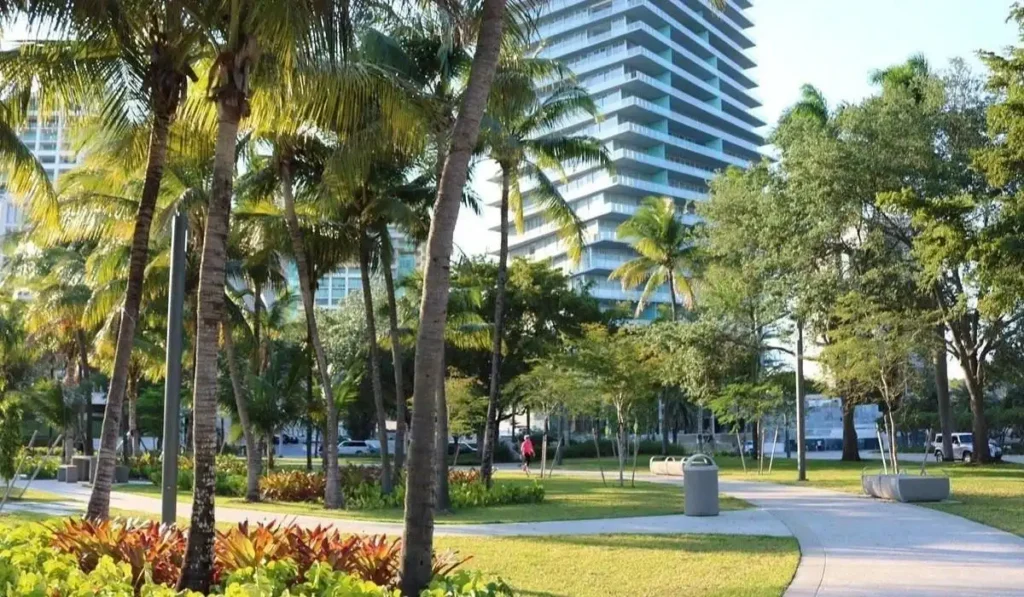
Rental demand in the Grove skews long-term and family-driven. Average rents across all inventory in northeast Coconut Grove sit around $1,635 per month, but that figure includes older and mid-range stock. Boutique luxury units in newer buildings lease well above that average, and tenants drawn by proximity to Ransom Everglades School, Carrollton School of the Sacred Heart, and other top private schools tend to sign multi-year leases. For a foreign owner managing a property remotely, a stable long-term tenant with school-anchored demand is operationally simpler than a building that turns over units every six months.
Foreign investors should also note that the purchase process for condos in Miami applies fully here: LLC structuring, due diligence on building financials, reserve fund review, and an understanding of any pending special assessments. In a neighborhood with low inventory and fast absorption, the temptation to move quickly on a property is real, and that is precisely when due diligence discipline matters most.
Who buys here: Families seeking a primary or long-term second residence near strong schools, and investors targeting low-supply appreciation with a stable, long-duration tenant base.
Brickell: record price per square foot and the densest rental demand in Miami
Brickell hit a record-high $950 per square foot in Q1 2026 the highest the neighborhood has ever registered in the luxury segment. That milestone matters because it arrives in an environment where the broader Miami market is absorbing higher inventory and longer days on market. Brickell’s rental fundamentals are strong enough to support prices even as the general market normalizes.
Average rents in Brickell reached $3,781 per month as of June 2026 (RentCafe/Yardi Matrix), the highest of any Miami neighborhood tracked in that dataset. At the luxury tier newer towers, bay views, full amenity package 2-bedroom units regularly lease at $4,000–$7,000 per month. A $700,000 purchase at $4,500 monthly rent produces a gross yield around 7.7%, with net yield typically landing in the 4–5.5% range after HOA fees, property taxes, and insurance.
A typical 2-bedroom Brickell condo purchase ranges from $630,000–$900,000, with all-in monthly carrying costs around $5,100–$6,600. Buyers need to run that number against their rental income projection to validate the deal. Brickell buildings also vary significantly on short-term and monthly rental permissions buildings that allow monthly stays typically command higher gross yields but require either active self-management or a property management company.
One risk worth naming: Florida’s property insurance market has been under pressure for several years, and post-Surfside inspection laws have triggered special assessments in some buildings. Before any offer, reviewing the building’s reserve fund, any pending assessments, and the specific insurance policy is non-negotiable due diligence.
Who buys here: Investors seeking the strongest combination of current rental yield and capital appreciation in a liquid, central Miami address. Also executives and professionals who use the unit part-time while generating income.
Coral Gables: lowest inventory, consistent price growth, and the most stable demand base
Coral Gables entered 2026 as the Miami neighborhood with the tightest inventory relative to demand, sharing the top Q1 appreciation ranking with Coconut Grove at 9.2% year over year. Average condo prices in Coral Gables cluster around $890,000, with boutique new developments running $750,000–$2.5 million and historic residences and estate properties reaching significantly higher.
The demand drivers here are structural and slow-moving, which is why the neighborhood holds value well through market cycles. The University of Miami generates a specific buyer and renter pool: faculty, senior researchers, and long-term administrators who tend toward multi-year commitments and often convert from rental to purchase over time. That base combines with the family market anchored by strong public and private school options, producing demand that does not respond sharply to interest rate fluctuations.
Liquidity is the main tradeoff. Coral Gables is not a neighborhood where you can exit a luxury condo in 30 days if circumstances change. The buyer pool is narrow and specific. But that narrowness is also what protects values: buyers who want Coral Gables are not easily redirected elsewhere, and sellers face less competition from comparable properties than in Brickell or Downtown.
For foreign investors, Coral Gables also offers practical advantages: the neighborhood has its own dedicated police force, consistently low crime rates, and a built environment that requires less day-to-day management attention than an active rental condo in a high-turnover building.
Who buys here: Investors who prioritize long-term stability over short-term yield, and families or retirees seeking a primary or second residence with a refined, low-density residential feel.
What foreign investors need to understand about Miami luxury real estate in 2026
The market has two tiers, and they are moving differently. Ultra-luxury, waterfront, and brand-associated properties are holding or appreciating. Mid-tier and older condo stock in oversupplied buildings is flat or correcting. Buying in the right tier at the right price is the entire game.
Carrying costs are higher than they were three years ago. Florida property insurance has roughly doubled over five years. Special assessments triggered by post-Surfside inspection legislation have hit owners in some buildings with five- and six-figure charges. Before any offer, a reserve fund review and pending assessment check is required, not optional.
Financing is available for foreign nationals. Banks and specialized lenders in 2026 generally require 30–50% down payment, plus passport, proof of funds, income certification, and bank references from your home country. Rates have come down from their 2023–2024 peaks, which has reopened the leveraged-purchase option for some investors who were previously buying cash only. Closing costs add 2–5% above the purchase price for title insurance, legal fees, and recording taxes.
An LLC is worth the conversation. Holding U.S. property personally exposes a foreign estate to federal estate tax above certain thresholds. A properly structured LLC addresses that exposure, provides privacy, and simplifies transfer or sale. Setup costs typically run $1,000–$2,500. For purchases above $500,000, most attorneys working with international clients recommend this structure.
Florida’s tax advantages remain intact. No state personal income tax. No state capital gains tax. Rental income and appreciation proceeds are subject only to federal tax, which is a meaningful structural advantage compared to most competing luxury real estate markets globally.
Frequently asked questions
Do I need a visa or immigration status to buy property in Miami?
No. Property ownership in the U.S. requires neither a visa nor residency, and it does not grant any immigration rights. You can purchase as a tourist, as a non-resident, or through a legal entity incorporated in the U.S. If your goal is a path to residency, certain investor visa categories (E-2, EB-5) involve real estate, but they operate on entirely different requirements. An immigration attorney can clarify what applies to your specific situation.
What are the main taxes involved in buying and holding luxury property in Miami?
The key taxes are: property tax, paid annually to Miami-Dade County based on assessed value; federal income tax on net rental income (Florida has no equivalent state tax); federal capital gains tax on profit at sale; FIRPTA withholding of 15% of the sale price when a foreign seller exits (mitigable with proper planning); and federal estate tax, which applies to foreign nationals holding U.S. property personally above certain thresholds. An international tax attorney and CPA should review your structure before you close.
What is a realistic net yield on a luxury condo in Miami right now?
It depends on the neighborhood and building. Brickell and Edgewater 2-bedroom units in quality newer towers are producing gross yields of 6–8% and net yields of 4–5.5% after HOA, insurance, and property tax. Sunny Isles branded buildings and Fisher Island typically produce 2–4% net because entry prices are higher and buildings often restrict rental periods. Coconut Grove and Coral Gables fall in between, with yields closer to 3–5% net and stronger appreciation profiles.
Is a property manager necessary for a foreign owner?
It is not legally required, but for most foreign investors managing from abroad it is effectively indispensable. A professional property manager handles marketing, lease execution, maintenance coordination, accounting, and compliance with local rental regulations. In buildings that permit short-term or monthly rentals, a specialized luxury property management company also handles guest services and cleaning. The management fee (typically 8–12% of gross rent) is worth modeling into your yield calculation from the start.
How long does the purchase process take for a foreign buyer?
Cash transactions with documents in order typically close in 30–45 days. Financed transactions run 60–90 days. The main variable for foreign buyers is document assembly: proof of funds and income certification can take time depending on your home country’s financial system. Starting that process before you identify a specific property saves significant time later.
If you want to compare current inventory across any of these neighborhoods or need a direct analysis of how your budget maps to available properties, the right next step is a conversation about your specific situation.
Reach out to the Florida HomeGroup Realty team, no obligation, fully bilingual, and grounded in 19 years of experience guiding Latin American investors through the Miami and Orlando markets.