A 5-star review on Airbnb isn’t the result of everything going well. It’s the result of nothing going wrong, and of a few specific details that made the stay feel better than expected.
The difference between 4 and 5 stars isn’t always property quality. Many times it’s the communication before check-in, the clarity of access instructions, or the presence of something small the guest wasn’t expecting. This checklist covers every touchpoint of the experience, from the first message to checkout.
Why reviews matter more than they seem
Airbnb ranks properties using multiple factors, but the average rating and number of reviews are two of the most determinative. A property with a 4.9 average and 80 reviews systematically appears before one with a 4.6 average and 30 reviews, even if the second one has a better price or location.
In the Orlando market, with hundreds of properties competing in communities like ChampionsGate, Reunion, or Storey Lake, that ranking is the difference between 75% and 55% occupancy.
Additionally, Airbnb Superhost status requires maintaining a rating of 4.8 or above. Superhost status gives additional visibility, a badge that increases guest trust, and access to priority platform support. For new properties with few reviews, Superhost status on the host account can compensate while their own reviews accumulate.
Phase 1: before check-in (48–72 hours before)
This phase defines the first impression. Guests arrive with expectations shaped by prior communication, and when reality matches what they were told, the experience starts well.
Welcome message in advance (48 hours before):
- Confirm the exact address and access instructions (door code, garage code, gate instructions if the community has one)
- Include the emergency contact phone number (local property manager or caretaker)
- Mention the WiFi (name and password)
- Indicate where the house manual is
- Ask approximately what time they plan to arrive (without making it an obligation for them)
House manual: Should be physically in the property and also available digitally (Airbnb has a specific field for this). The manual should include:
- Thermostat instructions
- How to turn the pool and pool heater on/off
- How to use the TV and streaming systems
- How to use the dishwasher, washer, and dryer
- Community rules (community pool hours, trash rules, visitor parking)
- Nearby supermarkets, pharmacies, and restaurants
- What to do in case of emergency
A clear manual cuts in half the messages asking “how does X work?” during the stay and directly improves the communication rating.
Phase 2: check-in (arrival)
Check-in is the moment that generates the most anxiety for guests, especially international ones arriving from long flights. When it goes well, it’s almost invisible. When it goes wrong, it’s the first thing that appears in the review.
Self check-in with smart lock: The smart lock with a unique code per stay is the market standard in Orlando. It eliminates physical keys, allows flexible access at any hour, and generates entry and exit records. Brands like Schlage, Yale, or August are the most used and compatible with property management systems.
The code should be sent to the guest before check-in (in the 48-hour message) and confirmed on the day of arrival. Never wait for the guest to ask for it.
If there’s a community gate: Gated communities in Orlando have gates with different access systems (visitor code, card, guard call). Clear instructions on how to enter the community are just as important as the house lock instructions. A guest arriving at night and unable to enter the complex is a guaranteed 3-star review.
Late check-in: For flights arriving at night or early morning, the guest needs to know they can arrive at any hour without a problem. Confirming this explicitly in the prior message eliminates a source of anxiety.
Phase 3: the property’s condition on arrival
The guest forms their first visual impression in the first 60 seconds of entering the property. There’s no second chance for that impression.
Cleanliness: Cleanliness is the factor most mentioned in negative reviews. It’s not enough for the property to be reasonably clean. It must be spotless. The points most scrutinized by guests are: bathrooms (especially shower, toilet, and mirror), kitchen (countertops, inside the microwave, inside the refrigerator), floors, and mattresses (visible stains).
If you use a cleaning service, do periodic inspections or ask for post-cleaning photos before each check-in. A cleaning company without supervision tends to become increasingly careless over time.
Temperature: In Florida, arriving at a house that’s 85°F because the air conditioning was off or set too high is a terrible first impression. The thermostat should be programmed so the house is between 72°F and 74°F when guests arrive. If that means turning on the AC a few hours before check-in, it’s an electricity cost of $2–$5 that pays for itself a thousand times over in the review.
Pool: If the property has a heated pool, the water should be at adequate temperature for check-in. A guest paying extra for a heated pool and arriving to cold water is a frequent and avoidable complaint.
Phase 4: the details that generate 5-star reviews
Up to this point we’ve covered what prevents negative reviews. What follows is what actively generates 5-star reviews: the details the guest wasn’t expecting but that make them feel the property goes beyond the basics.
Welcome basket: A welcome basket with basic items has a low cost and high impact on perception. Standard contents for families in Orlando:
- Coffee, tea, and sugar
- Small milk or creamer
- Some snacks (cookies, chips)
- Full-size soap, shampoo, and conditioner (not hotel minis)
- Toilet paper for the first days (minimum 2 rolls per bathroom)
- Dishwasher tablets and laundry detergent
Total cost: $25–$40 per stay. Impact on reviews: consistently mentioned as “a detail that’s appreciated.”
Personalized local guide: A sheet or leaflet with the host’s 5 recommendations (family restaurant, nearby ice cream shop, supermarket 5 minutes away, children’s park) is a personal touch that differentiates the property from a generic one. Guests who feel the host cared about their experience rate better even when there’s a minor problem.
Extras for children: Orlando is a family destination. Items like pool floats, life vests for children, board games, and a selection of children’s movies or channels on the TV are details that families actively appreciate and mention in reviews.
Phase 5: during the stay
The goal during the stay is to be available without being intrusive.
Follow-up message (day 2): A short message the day after check-in (“Did you arrive well? Is everything working?”) has two effects: if there’s a problem, the guest mentions it in time and it can be resolved during the stay rather than in the review. If there’s no problem, the guest perceives the host as attentive.
Fast response to problems: When something fails (and eventually something will fail), the speed and attitude of the response determines whether it becomes a one-star deduction or a positive mention in the review. “We had a problem with the air conditioning but the host resolved it in 2 hours” can be a 5-star review.
Having a local caretaker or property manager with fast response time is a fundamental part of the system. A host who takes 6 hours to respond to a maintenance problem will lose rating points regardless of whether they resolve the problem.
Phase 6: checkout
Checkout is the last point of contact and the one closest to when the guest writes the review. Make it easy.
Clear, simple checkout instructions: Don’t put 15 checkout steps. Guests won’t follow them all. Reasonable instructions are: take out the trash, leave dishes washed or in the dishwasher, leave keys/code as instructed, no cleaning required (that’s what the cleaning service is for).
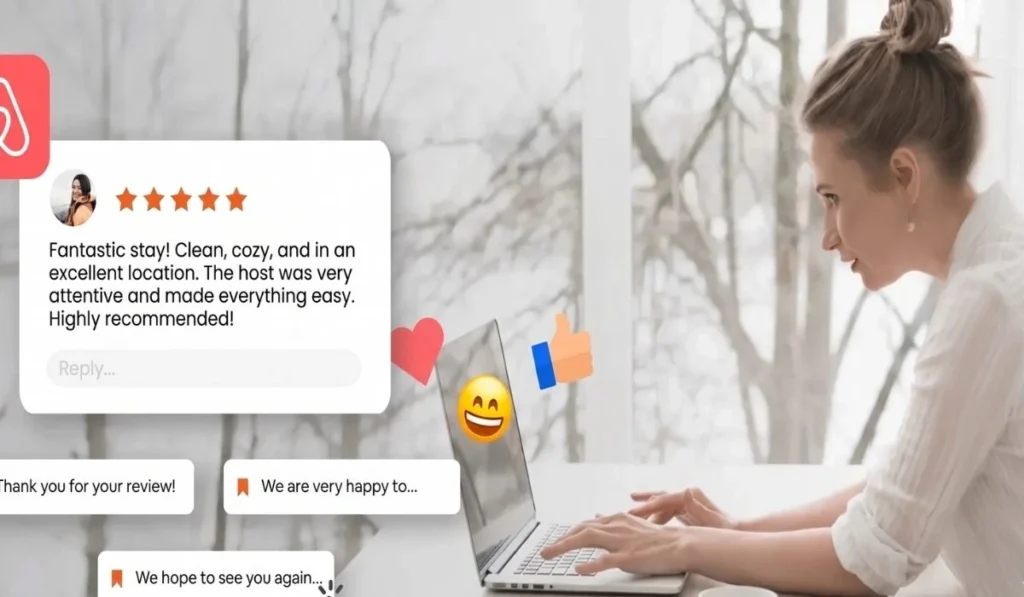
Goodbye message: An automated message sent on checkout day (“We hope you enjoyed your stay. You can leave the property whenever you’re ready. It was a pleasure hosting you.”) closes the experience well and puts the guest in a positive mindset just before Airbnb asks them to write a review.
Review request (without being invasive): Airbnb automatically sends a review reminder. What you can do is mention in the goodbye message that reviews are important for continued improvement. Don’t explicitly ask for “5 stars” (it violates Airbnb’s terms), but you can express that feedback is valuable.
For owners who want a complete guest experience management system, including automated messages and response protocols, the Airbnb automation tools for Orlando in 2026 can be implemented with or without a property manager.
Frequently asked questions
How many stars do I need to become a Superhost?
4.8 average over the last 12 months, with at least 10 stays or 100 nights rented, a response rate of 90% or above, and less than 1% cancellations by the host.
What do I do if I receive an unfair or false review?
You can respond publicly to the review (what future guests see) and, if the review violates Airbnb’s terms (contains false information or inappropriate language), you can report it for review. Airbnb rarely deletes reviews, but a well-written, professional response can neutralize the impact of a negative review.
Is it worth investing in higher-quality furnishings to improve reviews?
For the specific area of mattresses: yes, it’s very much worth it. It’s the element most mentioned in both positive (“excellent mattresses”) and negative (“uncomfortable mattresses”) reviews. Investing in a good mattress has direct ROI in rating.
Does personal check-in (without self check-in) give better reviews?
In the Orlando market, a well-implemented self check-in delivers equal or better results than personal check-in because it eliminates the dependency on scheduling coordination. Guests value flexibility more than human contact at the moment of arrival.
How long does it take to establish a consistent 5-star process?
With the right systems in place, between 3 and 6 months. The first 10 stays are the most variable because you’re identifying the specific issues of your property and community. After 20 stays, the processes are well refined and operations become more predictable.
If you want to review your property’s current experience or design a 5-star system from the start, our team can help you implement it. Request your profitability analysis by zone and we include a review of the operational strategy at no additional cost.