Direct answer: Investing in Florida as a foreigner is legal and accessible: no citizenship, residency, or visa is required. What makes the difference is preparing four fronts well: the ownership structure, the ITIN, the taxes (property tax, income tax, estate tax, and FIRPTA), and the closing. This guide gives you the overview of each and routes you to the detail.
Can a foreigner invest in Florida?
Yes. Any foreign individual or legal entity can buy and own property in Florida with no nationality restrictions. The purchase does not grant a visa or residency; it’s a real estate transaction. You can review the full eligibility requirements in requirements to buy a house in Florida.
Ownership structure: personal, LLC, or trust
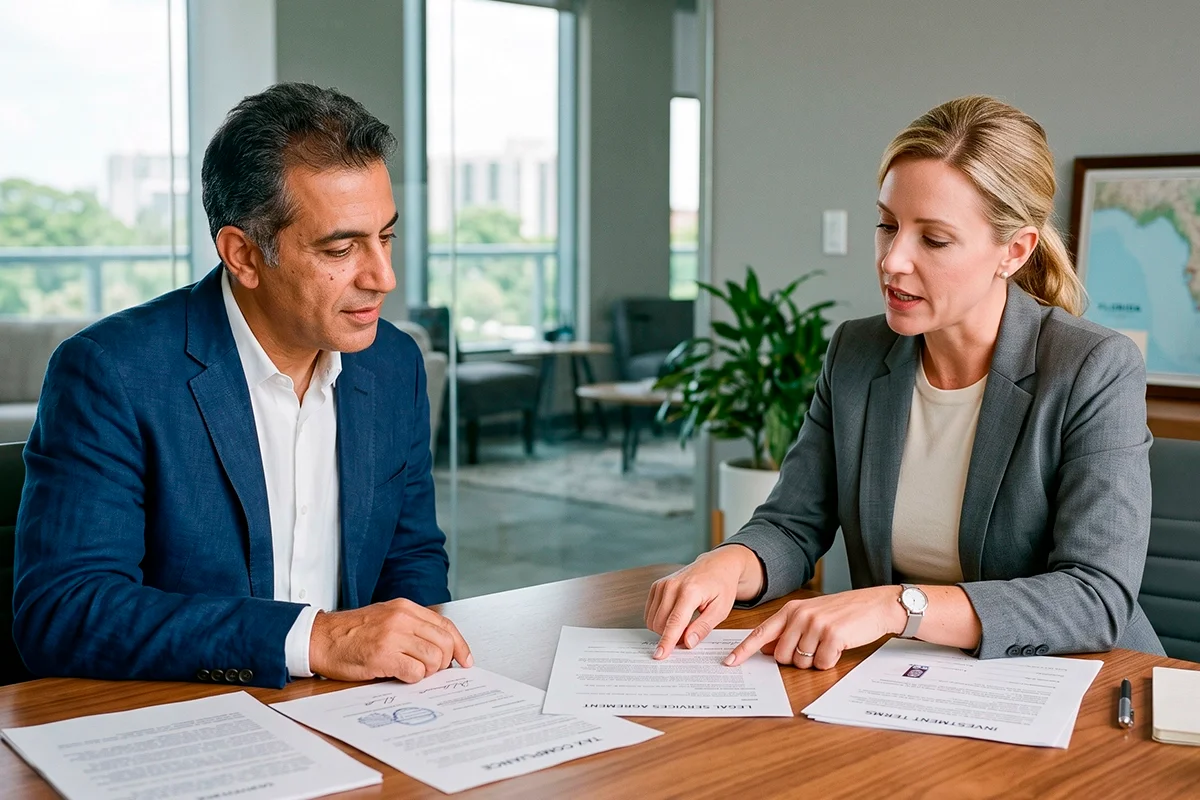
This is the decision with the greatest long-term impact and should be made before signing. Buying under your own name is straightforward, but your name stays on the public record and the property goes through probate when you pass away. A Florida LLC is the structure most used by foreigners: privacy, asset protection, and no probate. A revocable trust helps with estate planning. The full step-by-step, including the documentation required for each structure, is in the legal checklist for foreigners.
ITIN: your tax number with the IRS
The ITIN is the tax identification number for foreigners with U.S. tax obligations. It’s not required to sign, but it is required to file income, handle FIRPTA, and operate an LLC. It’s requested with Form W-7 and takes 7 to 11 weeks, so it’s worth starting early.
Taxes for the foreign investor
Four taxes you should know:
| Tax | What you should know |
|---|---|
| Property tax | 0.8–1.2% annually in the Orlando area; no Homestead Exemption for foreigners. |
| Income tax | 30% withholding or filing on net income (1040-NR). Florida has no state income tax. |
| Estate tax | A threshold of just $60,000 for non-residents; up to 40% on the excess. The ownership structure mitigates this. |
| FIRPTA | 15% withholding on the gross sale price when selling; recoverable through your filing. |
The full detail, with numeric examples and how each withholding is calculated, is in the taxes for foreigners in Florida guide.
Financing (the tax-legal dimension)
If you finance, the structure you choose (individual or LLC) and your ITIN directly affect your mortgage terms. You can see how the full process works in mortgage financing for foreigners.
Documents and remote closing
The transaction requires identity documents, proof of funds and, if applicable, LLC bylaws. Florida allows electronic signatures, remote online notarization (RON) and an apostilled power of attorney, so you can close without traveling. Full document list in documents to buy a house in Florida. The property title is also transferred at closing; see how that process works in property title in Florida: a guide for foreigners.
Your professional team
A well-protected investment combines a real estate agent experienced with foreign buyers, an international CPA, and a real estate attorney. They validate the structure, the taxes, and the closing. If you want to see the full process from start to finish, check the guide to buying a home in Florida as a foreigner.
Frequently asked questions
What legal and tax aspects should I consider?
Ownership structure, ITIN, taxes (property, income, estate, FIRPTA), and closing. No citizenship, residency, or visa required.
Do I need an LLC?
It’s not required, but it’s the most commonly used option: privacy, protection, and no probate. Decide before signing.
Does buying give me residency?
No; it’s a real estate transaction with no immigration benefits.
Want to make sure your structure, your ITIN, and your taxes are properly handled before you sign? Schedule a consultation with Florida HomeGroup Realty and we’ll walk through every legal and tax angle of your investment in Florida with you.