
Argentina has a complicated relationship with its own money. That’s no secret. Currency controls, devaluation cycles, and political uncertainty have pushed thousands of Argentines to look for somewhere safe to put their savings outside the country. Florida isn’t the first choice by coincidence: it’s one of the few markets where an Argentine can buy in dollars, under clear rules, without depending on the next government changing the playing field.
This guide covers what you need to know specifically as an Argentine to buy a property in Florida in 2026: how to move the money, what financing exists for foreigners, which legal structure makes sense, and which areas make the most sense depending on your goal. If you want the full, general purchase process first, without the Argentina-specific details, check our guide to buying a house in Florida as a foreigner.
Why Florida remains the top choice for Argentines
Florida isn’t the only state in the U.S. where you can invest, but it is the most popular among Latin Americans. There are concrete reasons for that.
- No state income tax. Florida is one of nine states that charges no state income tax. For a foreign investor generating rental income, that significantly reduces the tax burden.
- Active rental market. Orlando receives more than 74 million tourists a year. Miami is one of the cities with the highest long-term rental demand on the entire East Coast. The combination of vacation rental and residential rental gives options that few markets offer together.
- Full dollarization of the asset. For an Argentine, buying in Florida isn’t just geographic diversification. It means converting pesos or local assets into a property denominated in dollars, protected by the American legal system, and unreachable by any Argentine exchange control measure.
- Stable legal framework. Property rights in the U.S. have decades of consolidated jurisprudence. There’s no risk of expropriation, no retroactive changes to the rules.
| Factor | Florida | Argentina |
|---|---|---|
| State income tax | 0% | Up to 35% |
| Asset currency | USD | ARS (volatile) |
| Legal security | High | Variable |
| Market liquidity | High | Low |
| Access to financing | Yes (foreigners) | Limited |
| Rental demand | Sustained | Unstable |
The real problem: how to get money out of Argentina
This is the question most articles on the subject avoid, and the one that matters most.
Argentina has active currency controls. Access to official dollars is restricted. That doesn’t mean investing abroad is impossible, but it does mean doing it with a clear strategy and, ideally, specialized advice.
The most common routes used by Argentine investors in 2026:
- Cash dollars or accounts abroad. Many Argentines have dollar savings outside the local financial system, or in accounts in Uruguay, Paraguay, or directly in the U.S. Those funds have no restriction on being used for an American real estate purchase.
- Transfer from a U.S. bank account. If you already have an account at an American bank, the transfer is straightforward. The bank will ask for documentation on the origin of the funds (know your customer), but the process is standard and well understood by title company compliance teams.
- Cryptocurrencies. Some Argentine investors use stablecoins (USDC, USDT) to move value out of the country and then convert to USD in an American account. It’s legal, but requires understanding the process and the tax implications in both countries.
- What to avoid: trying to move funds through informal channels or without documenting their origin. The title company handling the closing in the U.S. has compliance obligations. If the origin of funds isn’t clear, the closing won’t proceed.
| Transfer route | Speed | Complexity | Risk |
|---|---|---|---|
| Own U.S. account | High | Low | Low |
| Uruguay/Paraguay account | Medium | Medium | Low |
| International wire from Argentina | Low | High | Medium |
| Cryptocurrencies (USDC/USDT) | Medium | Medium | Medium |
Mortgage financing for Argentines: it exists
One of the most common beliefs among Argentine investors is that to buy in the U.S. you need 100% of the money available. That’s not the case.
Loans for foreigners without American residency (foreign national loans) exist and are accessible to Argentines who meet certain requirements. For investment properties, the DSCR loan in Florida is also available, evaluating the projected cash flow from the property rather than the applicant’s personal income, making it especially useful for those who can’t or don’t want to document income in Argentina.
Typical requirements in 2026:
- Down payment of 25% to 30% of the property value
- Valid passport
- Bank reference letter from your bank in Argentina or wherever you have an account
- Bank statements from the last 3 to 6 months
- Employer letter or income documentation (if employed)
- For self-employed: tax returns from the last two years
Rates in 2026: For foreign nationals, rates range between 7.5% and 9% annually depending on the applicant’s profile, loan amount, and property type. They’re higher than rates for American residents, but still competitive compared to the opportunity cost of not investing.
| Loan type | Minimum down payment | Documents income | Ideal for |
|---|---|---|---|
| Foreign national loan | 25–30% | Yes | Employees / professionals |
| DSCR loan | 25–30% | No | Investment with projected rental |
| Hard money loan | 30–40% | No | Fix & flip / short term |
LLC or direct purchase: which structure to use
Most Argentine investors in Florida buy through an LLC (Limited Liability Company). There are practical reasons for that, but there are also cases where direct purchase makes sense.
Advantages of the LLC:
- Asset protection. If someone gets hurt on your property and sues you, the LLC limits liability to the company’s assets, not yours personally.
- Privacy. In Florida, the name of an LLC’s owner doesn’t appear in the public property registry. Your name does appear if you buy in your personal name.
- Simplified succession. Transferring the property to your heirs is simpler when it’s held in an LLC. You avoid the American probate process, which can be long and costly for a family based in Argentina.
- Potential tax advantage. Depending on how you structure the LLC (single member or multi-member), you can choose how gains are taxed.
When direct purchase might make sense:
- Low-value properties where the cost of maintaining the LLC doesn’t justify the benefit
- When the financing bank requires a personal purchase (some lenders have this restriction)
- When a legal advisor determines the client’s specific profile doesn’t need the additional protection
Cost of maintaining an LLC in Florida: between $125 and $200 per year in state renewal fees, plus registered agent honoraries and accountant fees if you want bookkeeping handled.
| Structure | Asset protection | Privacy | Annual cost | Succession |
|---|---|---|---|---|
| LLC | High | High | $300–$600 | Simple |
| Direct purchase | None | Low | $0 | Probate |
| Revocable trust | Medium | High | $500–$1,000 | Simple |
The best zones in 2026 according to your goal
Not all zones of Florida work the same way for an Argentine investor. The goal defines the zone.
If you want vacation rental and cash flow from year one:
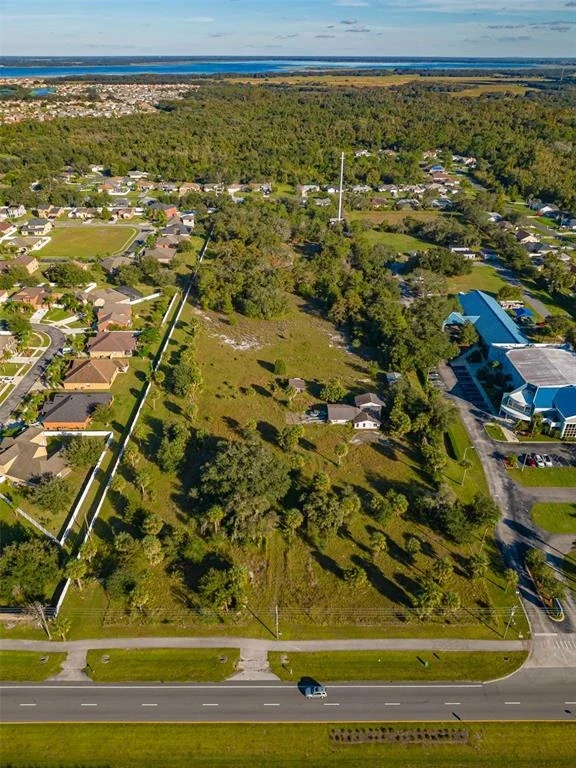
Kissimmee and Davenport are the zones with the highest density of short-term rental-enabled properties near Disney. The most profitable resort communities in Kissimmee in 2026 like Champions Gate, Reunion, and Windsor Hills show average annual occupancy rates between 65% and 80%. Entry price for a 4-bedroom home with private pool starts at $400,000.
If you want long-term appreciation:
Lake Nona is the zone with the most planned growth in the Orlando metropolitan area. With the Medical City expansion, the technology park, and the arrival of the Brightline train, prices have risen consistently. Less suitable for vacation rental, but very solid for long-term residential rental.
If you want a premium asset in Miami:
Brickell, Coconut Grove, and Coral Gables are Miami’s most liquid markets for foreign investors. Prices start at $600,000 for a 1-bedroom apartment in Brickell. Historical appreciation in these zones exceeds 6% annually over the last decade.
If your budget is tighter:
Saint Cloud and Davenport offer new properties from $280,000 with well-equipped communities. These are zones with solid growth potential and more accessible entry costs for a first investment.
| Zone | Entry price | Best for | Estimated cap rate |
|---|---|---|---|
| Kissimmee / Champions Gate | $400,000+ | Vacation rental | 6–8% |
| Davenport | $280,000+ | Vacation rental / first investment | 5–7% |
| Lake Nona | $450,000+ | Appreciation / long-term rental | 4–5% |
| Brickell, Miami | $600,000+ | Appreciation / luxury | 3–5% |
| Saint Cloud | $330,000+ | First investment / long-term rental | 5–6% |
Taxes an Argentine must understand before buying
- FIRPTA. When a foreigner sells a property in the U.S., the buyer is required to withhold 15% of the sale price and send it to the IRS. That 15% isn’t the final tax — it’s a withholding on account. If the actual tax is lower, the difference can be claimed back. There are exceptions when the property is worth less than $300,000 and the buyer will use it as their primary residence.
- Federal income tax. Rental income generated in the U.S. is taxed in the U.S., regardless of where the owner lives. The rate for non-residents on rental income is 30% of gross income, unless you elect to be taxed on net income (which is generally more advantageous).
- American estate tax. For non-resident foreigners, the exemption threshold is only $60,000. Everything above that amount can be subject to a tax of up to 40%. This is one of the strongest arguments for buying through an LLC or trust.
- Argentina and double taxation. Argentina and the U.S. do not have an active double taxation treaty. That means you could end up taxed in both countries on the same income. An accountant experienced in both systems can minimize that impact.
Frequently asked questions
Do I need an American visa to buy a property in Florida?
No. Anyone can buy property in the U.S. regardless of nationality or immigration status. The purchase doesn’t grant a visa or residency, but doesn’t require one either.
Can I finance 100% of the property value as an Argentine?
No. Loans for foreigners without American residency require a minimum down payment of 25% to 30%. There is no 100% financing for non-residents.
How long does the buying process take from Argentina?
With documents in order, between 30 and 60 days from accepted offer to closing. If financing is pre-approved before making the offer, the process is faster.
Do I need to travel to Florida to close the purchase?
Not necessarily. Florida allows remote closing with digital notarization. You can sign all documents from Argentina through a certified platform.
What happens with the inheritance tax if I die as a property owner in Florida?
If the property is in your personal name, the American estate tax applies to the value exceeding $60,000. With a properly structured LLC or trust, that risk can be significantly mitigated.
Can I rent the property when I’m not using it?
Yes. Most properties in resort communities in Kissimmee and Davenport are specifically enabled for short-term rental. In residential zones, rules vary by community — the HOA regulations must be verified before buying.
If you have specific questions about your situation as an Argentine investor, our team can guide you on structure, financing, and zones at no commitment.