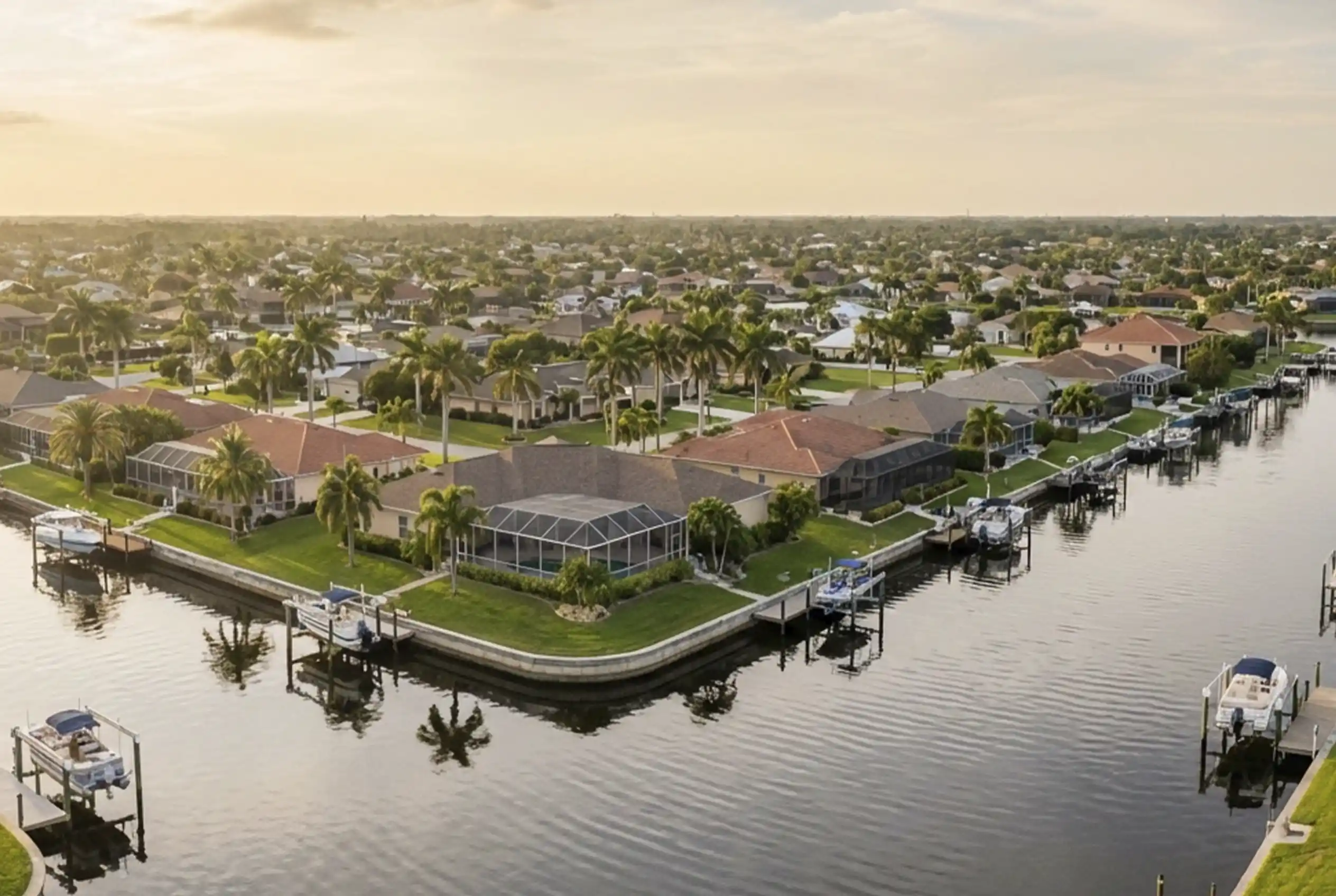
While most Latin American investors look at Orlando and Miami, Cape Coral has spent years quietly building one of the most interesting rental markets in Florida. By 2026 it is no longer a secret, but it still does not have the level of competition or inflated prices that characterize the more well-known markets.
This article analyzes why Cape Coral is on the radar of foreign investors, what type of property works best there and what real risks the market has that no sales presentation will tell you.
What Cape Coral is and why it matters
Cape Coral is in southwest Florida, in Lee County, about 20 minutes from Fort Myers. It is a planned city built on a system of artificial canals that has more navigable canal miles than Venice. Literally. With more than 400 miles of canals, it is the city with the most canals in the world.
That detail is not just a tourism fact. Canal-front properties with direct access to the Gulf of Mexico by boat create a rental demand category that does not exist in Orlando: the adult tourist without children who comes to fish, navigate and enjoy the gulf. That guest profile is different from the Disney-visiting family and has distinct booking patterns and willingness to pay.
Cape Coral was significantly affected by Hurricane Ian in September 2022. That generated a temporary price drop that some investors took advantage of. By 2026 the market has largely recovered but prices remain more accessible than Miami and many parts of Orlando.
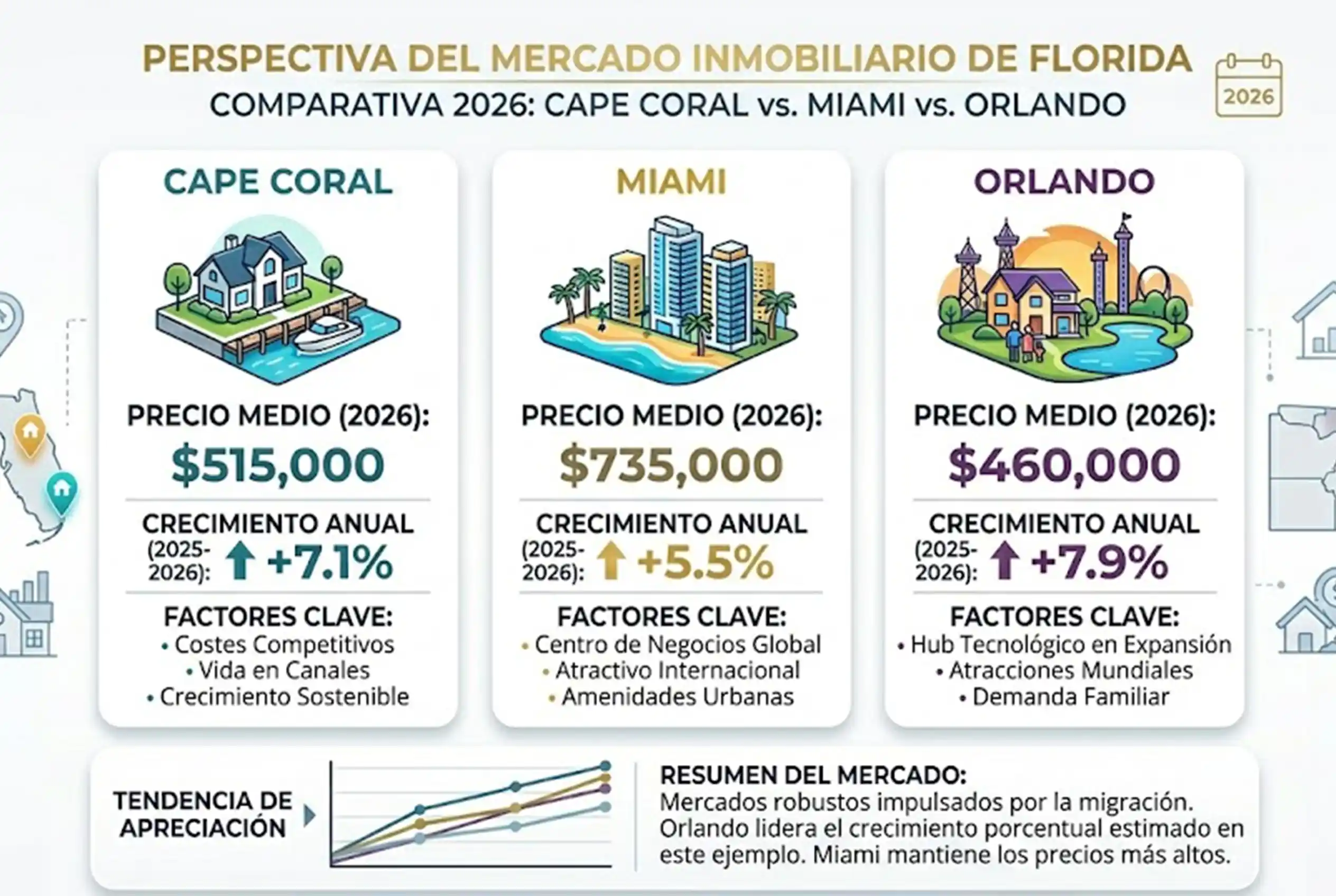
Comparison table: Cape Coral vs other Florida markets 2026
| Market | Median property price | Canal-front price | Gross short-term rental income | Average occupancy | Hurricane risk |
| Cape Coral | $320,000 – $480,000 | $450,000 – $800,000 | $35,000 – $65,000 | 60% – 75% | High (coastal zone) |
| Kissimmee (Orlando) | $350,000 – $550,000 | N/A | $45,000 – $80,000 | 68% – 85% | Low-medium |
| Miami / Miami Beach | $500,000 – $1,200,000+ | $700,000 – $2M+ | $50,000 – $120,000 | 65% – 80% | High |
| Lake Nona (Orlando) | $400,000 – $700,000 | N/A | N/A (long-term) | N/A | Low |
Data is reference-based for 2026. Cape Coral figures reflect post-Ian recovery but may vary by specific zone within the city.
What type of property works in Cape Coral
Canal-front with gulf access This is the most profitable and hardest to find at an accessible price. Properties with direct access to the Gulf of Mexico through the canals (without low bridges limiting boat passage) have higher demand and higher nightly rates. They are the first to recover value after a hurricane and the ones that generate the most stable guest profile.
Canal-front without gulf access (freshwater canal) Cape Coral has two types of canals: those that connect to the gulf and freshwater canals that do not. Freshwater canal properties are cheaper but generate less vacation rental demand because the main appeal of water access does not apply to someone who wants to go gulf fishing.
Standard properties without canal These exist and have long-term rental demand from local residents and workers. Cape Coral has a diversified economy and residential demand. Non-canal homes in well-located areas can generate stable long-term rentals at a lower entry price, but they lose the city’s differentiating factor.
To understand how to structure the purchase legally and fiscally from abroad, you can review our guide on how to open an LLC in Florida.
The real risk that does not appear in presentations
Hurricane Ian in 2022 was devastating for parts of Cape Coral. Properties without adequate insurance were left with hundreds of thousands of dollars in damage without coverage. Property owners who did have insurance waited months for payments while still paying the mortgage.
That episode left clear lessons:
Insurance in Cape Coral costs more than in Orlando Insurance premiums in Florida coastal zones have increased significantly since Ian. Some insurers left the Florida market entirely. The insurance cost for a Cape Coral property can be 2 or 3 times higher than a similar property in Kissimmee. That fixed cost directly affects ROI and must be included in calculations before buying.
Flood insurance is mandatory in risk zones Many Cape Coral properties are in FEMA-designated flood zones (Flood Zone AE or similar). For those properties, federal flood insurance (NFIP) is mandatory if you have a mortgage and highly recommended if you pay cash. The additional cost can be $2,000 to $8,000 annually depending on the zone and property value.
Hurricane season lasts 6 months From June to November, Florida’s Gulf Coast has hurricane risk. That does not mean a hurricane occurs every year, but it does mean that property management during those months requires specific protocols: storm preparations, guest communications, possible cancellations and a damage contingency plan.
If your investor profile does not tolerate climate uncertainty well, Cape Coral may not be the right zone for you regardless of the numbers.
ROI projection for a canal-front property in Cape Coral
Example with a canal-front 3-bedroom home with private pool and gulf access, purchase price $520,000:
- Closing costs (3%): $15,600
- Furniture and equipment: $22,000
- Capital reserve: $15,000
- Total investment: $572,600
Short-term rental projection (65% occupancy, $220 average per night):
- Annual gross income: $52,195
- Operating expenses (52%): $27,141
- Insurance (owner + flood): $8,500
- Property tax: $5,800
- Estimated net income: $10,754
- Net ROI: 1.9%
That net ROI is low compared to Kissimmee. What changes the equation is appreciation. Canal-front properties in Cape Coral have shown strong historical appreciation, and if the market continues recovering post-Ian, the total return over 5 to 10 years can be more attractive than the annual cash flow suggests.
To compare these figures with other zones, you can review our analysis of vacation home ROI in Orlando.
FAQ about investing in Cape Coral
Does Cape Coral allow short-term rentals?
Yes. Cape Coral allows vacation rentals at the municipal level, though HOA restrictions may exist in specific communities. Unlike many Florida cities, Cape Coral has not imposed severe restrictions on platforms like Airbnb or Vrbo.
How did Hurricane Ian affect property values in Cape Coral?
Ian generated a temporary price drop in 2022 and 2023, especially in areas that sustained severe damage. In 2024 and 2025 prices recovered in the most in-demand zones. In 2026, the market is near pre-Ian levels in prime areas, though some areas remain below.
Is it harder to get a mortgage for a Cape Coral property than in Orlando?
It can be. Some lenders are more cautious with properties in designated flood zones. The cost of required insurance also increases the total monthly payment (PITI: principal, interest, taxes, insurance), which can affect loan qualification.
How far is Cape Coral from Florida’s main airports?
Fort Myers Airport (RSW) is about 25 minutes from Cape Coral. Miami is about 2.5 hours by car and Orlando about 2 hours. RSW has direct flights from several Latin American and American cities.
Cape Coral is a real market with real opportunities. It also has real risks that cannot be resolved with positive numbers on a spreadsheet. If you enter with complete information, it can be a good decision. If you enter with sales presentations without asking the difficult questions, it can be a costly experience.
Schedule your free consultation and let us analyze whether Cape Coral fits your investment profile