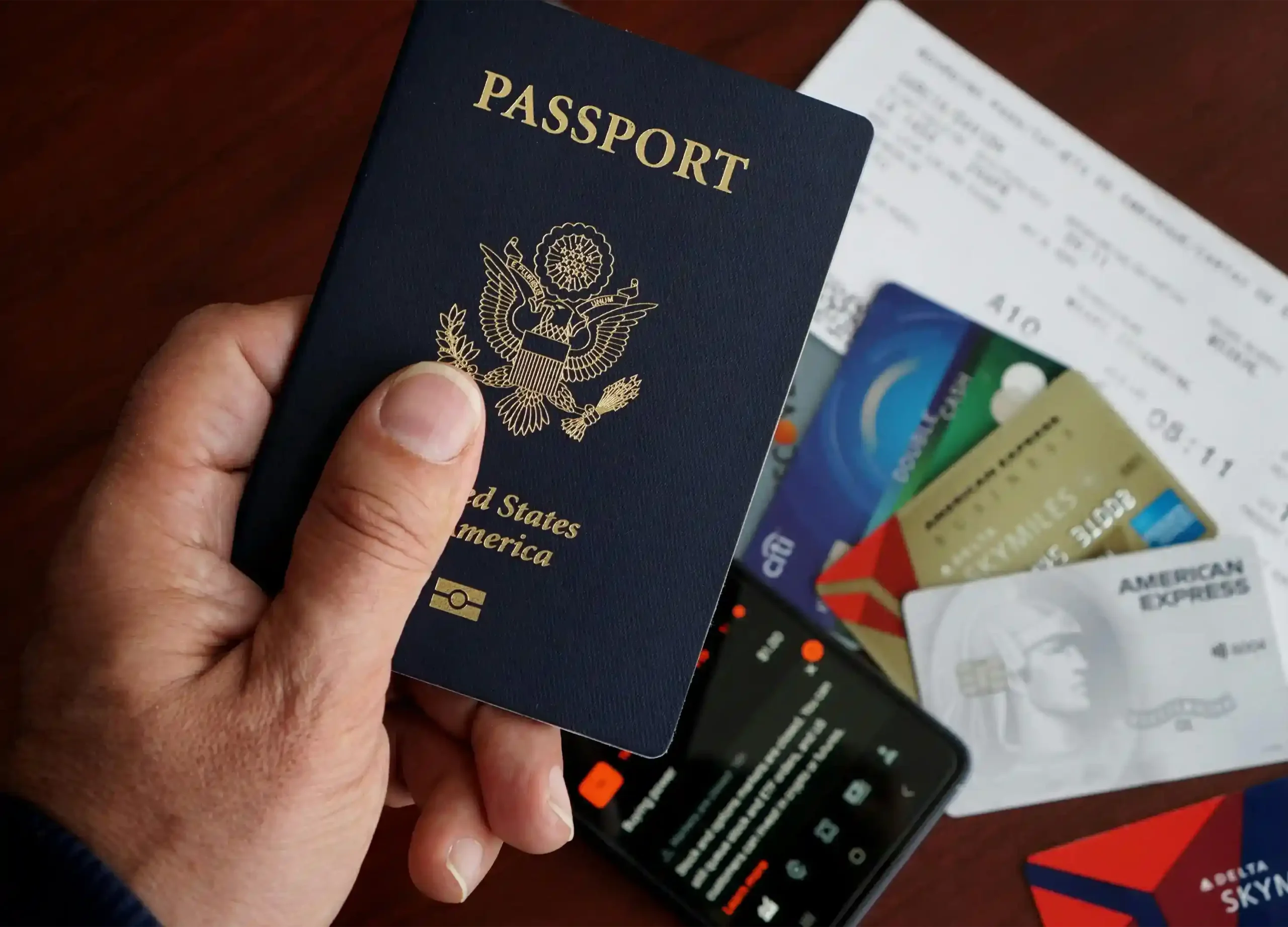
The E-2 visa is probably the most misunderstood immigration route available to Latin Americans who want to establish themselves in the United States through investment. It is sometimes presented as a quick and accessible solution, and sometimes as something impossible to obtain without millions of dollars. The reality is somewhere in between, and understanding it well can be the difference between an approved application and a rejected one.
This article explains what the E-2 is, what role real estate can play in the investment structure and what common mistakes lead to avoidable rejections.
What the E-2 visa is and what it offers
The E-2 visa is a non-immigrant visa that allows citizens of countries with a commerce treaty with the US to live and work in the country while actively managing a substantial investment in an American business.
What it offers: authorization to live and work in the US with renewals that can be maintained indefinitely as long as the business continues operating. Direct dependents — spouse and children under 21 — also receive the visa, and the spouse can obtain work authorization.
What it does not offer: permanent residency. The E-2 is not a direct path to a Green Card. It does not accumulate time toward citizenship. If the business closes or the investor stops actively managing it, the visa loses its legal basis.
Latin American countries whose citizens can apply for the E-2 include Colombia, Mexico, Chile, Argentina, Honduras, Costa Rica, El Salvador, Panama and Ecuador. Venezuela does not have an active commerce treaty with the US, so Venezuelan citizens do not qualify for the E-2.
The real investment requirements
The E-2 has no legally established investment minimum. That is the source of much confusion. The consul evaluates whether the investment is “substantial” relative to the type of business, not whether it exceeds a fixed threshold.
In practice, American consuls have established informal criteria that give an idea of the range:
| Business type | Reference minimum investment | Jobs required |
| Service business (agency, consulting) | $100,000 – $150,000 | At least 1-2 American employees |
| Established franchise | $150,000 – $300,000 | Per the franchise model |
| Manufacturing or distribution company | $200,000 – $500,000+ | Proportional to scale |
| Real estate management company | $200,000 – $400,000 | Depends on scale |
| Restaurant or retail | $150,000 – $350,000 | 3-5 American employees |
Ranges are references based on approved cases. Each application is evaluated individually and the consul’s criteria has significant discretionary margin.

The problem of using only residential real estate for the E-2
This is where most investors make costly mistakes.
A residential rental property, whether on Airbnb or with an annual contract, generally does not qualify as the basis for an E-2 visa. There are two reasons.
First, investment in a residential property is passive: the value is in the asset, not in an active business the investor manages. The E-2 requires investment in a real business with active operations.
Second, a typical rental property does not generate enough American jobs to satisfy the marginality criterion that consuls evaluate: the investment must generate more economic benefit for the United States than for the investor themselves.
However, there are structures where real estate can be part of a valid E-2 application:
- A property management company with sufficient scale to hire American employees (2 to 5 full-time employees)
- A vacation rental management business structured as an operating company, not a passive investment
- A property construction or renovation company with American employees on payroll
The key is that the business has real American employees, active operations and that the investor manages it directly.
To structure the legal and real estate aspects of an E-2 application correctly, the legal advice team at Florida HomeGroup Realty can guide you on how to connect the real estate investment with the business structure the visa requires.
Table: E-2 vs EB-5 for Latin American investors
| Criterion | E-2 visa | EB-5 visa |
| Visa type | Non-immigrant (temporary) | Immigrant (permanent) |
| Minimum investment | ~$100,000 – $350,000 | $800,000 |
| Permanent residency | No | Yes (Green Card) |
| Processing time | 3 – 6 months | 3 – 7 years |
| Active management required | Yes | No (via Regional Center) |
| American jobs required | Yes (direct) | Yes (indirect allowed) |
| Applies to Venezuelans | No | Yes |
| Renewals | Indefinite while business operates | N/A (permanent) |
If you are Venezuelan, the E-2 is not an option because Venezuela does not have the required commerce treaty. In that case, the EB-5 or the EB-1C visa (for executives of multinational companies) are the most common routes.
How to structure the real estate investment for an E-2 application
If you decide to use real estate as the basis of an E-2 business, the most viable structure in Florida is a property management or vacation rental management company with these characteristics:
The company must exist before the application. Consuls are skeptical of businesses created specifically to obtain the visa. A company with an operating history, signed contracts and real employees has more credibility.
There must be real American employees. At least 1 or 2 full-time employees on payroll. An externally contracted property manager can count if they are under a formal employment contract with the company.
The investor must actively manage. The E-2 is not for someone who wants a passive investment. The consul can request evidence that the applicant is making operational business decisions.
The investment must be committed. Funds must be invested or in the process of being invested at the time of application. Money sitting in a savings account pending use does not qualify.
If you also want to understand how the E-2 visa complements the immigration consulting service at Florida HomeGroup, you can visit our immigration consulting page for initial guidance on your specific case.
FAQ about the E-2 visa for Latin Americans
Can I buy a franchise in Florida to qualify for the E-2?
Yes. Franchises are one of the most commonly used structures for E-2 applications because they have proven business models, franchise agreements that document the investment and operations that generate jobs. Fast food, cleaning services or fitness franchises are common options.
Can the E-2 be converted to a Green Card?
Not directly. The E-2 alone does not generate a path to permanent residency. However, some E-2 holders later qualify for other Green Card categories, such as EB-1C if their company has subsidiaries or EB-2 NIW in cases of exceptional merit.
How long does the E-2 visa last?
The visa in the passport is issued for periods of 2 to 5 years depending on the country of origin. But the status in the US (the authorization to be in the country) is granted for 2-year periods renewable indefinitely as long as the business continues operating.
What happens if the business does not generate enough income to sustain itself?
If the business cannot demonstrate economic viability in future renewals, the visa may be denied. The E-2 requires that the business not be marginal: it must generate enough income for the investor and their family to live in the US beyond the initial invested capital.
The E-2 can be a real path to life in Florida for Latin American investors with the right profile. Using it with an incorrect structure can result in a rejection that closes the door for years. The difference is made by correct structuring from the start.
Consult our immigration specialist and evaluate whether the E-2 applies to your situation