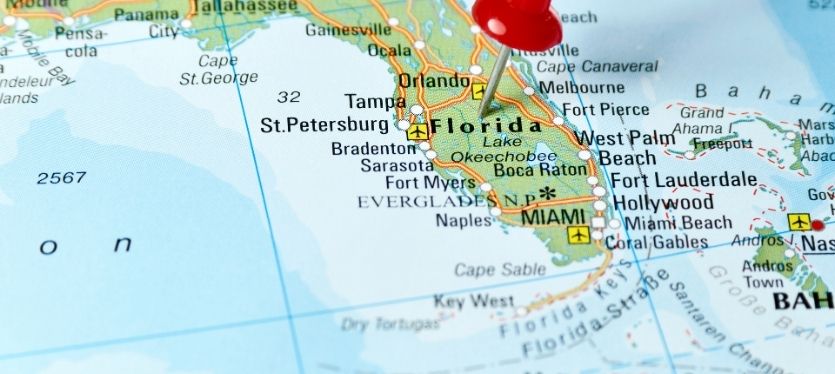
Investing in U.S. real estate, particularly in Florida, is one of the smartest strategies for foreign investors, especially for Latin Americans seeking to protect their wealth, generate income in U.S. dollars, and take advantage of a solid and growing market.
However, when entering this market, it’s not enough to focus solely on profitability and appreciation. It is essential to understand the tax structure surrounding real estate investments, as knowing the basic taxes will allow you to better plan your investment, optimize your returns, and avoid surprises when buying, maintaining, or selling a property in Florida.
Below, we’ll explain the main taxes you should be aware of when investing in Florida in 2025, along with some recommendations for managing them efficiently with the guidance of experts.
1. Property Tax
Property tax is one of the most significant taxes for any real estate owner in Florida.
- It is calculated based on the property’s assessed value and the percentage set by the corresponding county.
- On average, the annual tax in Florida is between 1% and 2% of the home’s value.
- For example, if you buy a house in Orlando with a value of $400,000, you can expect an annual property tax of between $4,000 and $8,000.
The good news is that Florida does not have a state income tax, which offsets this expense. Furthermore, income generated from rentals usually easily covers the property tax when the investment is planned correctly.
2. Income Tax on Rental Income
Although Florida does not have a state income tax, foreign investors must still report income generated from their properties to the IRS (Internal Revenue Service).
- The federal income tax on rental income can range between 10% and 37%, depending on the investment structure and net income.
- There are deductions that allow you to reduce your taxable income, such as:
- Maintenance and repair expenses.
- Mortgage interest.
- Property management fees.
- Annual depreciation of the property.
Therefore, it is crucial to have an accountant or tax advisor who specializes in international investors to ensure you file correctly and optimize your tax payments.
3. FIRPTA: Tax for Foreigners When Selling Properties
One of the most important taxes every foreign investor must know about is the Foreign Investment in Real Property Tax Act (FIRPTA).
- FIRPTA requires that when you sell a property, 15% of the sale price is withheld by the IRS as an upfront tax payment.
- This withholding doesn’t necessarily mean you will lose that percentage; by filing a tax return, you can recover part of that money if the actual tax on your gain was less.
- For example, if you buy a house for $300,000 and sell it for $400,000, your real profit was $100,000. The applicable tax will be on that profit, not the total of $400,000. Nevertheless, the buyer is required to withhold 15% of the total until you file the corresponding tax return.
4. Sales Tax
Sales tax in Florida is another point to consider.
- It primarily applies to services and short-term rentals, such as Airbnb or vacation rentals.
- In most Florida counties, the sales tax is 6% to 7% on short-term rentals.
- In Orlando and Kissimmee, for example, owners who offer vacation rentals must collect and remit this tax.
If your strategy is to invest in properties for vacation rentals, you must factor this additional cost into your profitability projection.

5. Inheritance Tax and Succession Planning
Many foreign investors are unaware that the United States has an estate tax that can affect heirs if the property is not structured correctly.
- In the event of death, if you are a foreigner and the property is in your name, your heirs could face an inheritance tax that can reach up to 40% of the property’s value.
- To avoid this impact, it is common for foreign investors to acquire properties through an LLC (Limited Liability Company) or through more advanced estate planning structures.
For this reason, it is recommended to seek legal advice before buying to define the best acquisition strategy.
6. Tax Benefits in Florida
Despite these taxes, Florida remains one of the most attractive states for real estate investment due to its favorable tax environment:
- There is no state personal income tax.
- Florida is considered a friendly jurisdiction for foreign investors.
- There are multiple deductions and tax credits that allow you to optimize your tax burden.
- Income in U.S. dollars and property appreciation far outweigh the applicable taxes.
Compared to other states, Florida offers an ideal balance between moderate taxes and high profitability, especially in cities like Orlando, Miami, Lake Nona, and Kissimmee.
7. Recommendations for Foreign Investors
To ensure your real estate investment in Florida is truly profitable, we recommend:
- Consulting with an accountant specializing in international investors.
- Evaluating the formation of an LLC before buying your property.
- Including taxes in your ROI analysis when comparing different options.
- Planning for the long term, considering rental, resale, and inheritance scenarios.
- Working with a real estate firm like Florida HomeGroup Realty, which understands the needs of Latin American investors and works with trusted tax and legal partners.
8. Florida HomeGroup Realty: Your Strategic Partner in Taxes and Investment
One of the key differentiators of Florida HomeGroup Realty is that we not only help our clients find properties with high profitability potential but also support them throughout the entire legal and tax planning process.
Our agents—many of whom are also investors—are backed by lawyers, accountants, and migratory advisors who specialize in international clients. This way, our investors can make informed decisions, protect their wealth, and maximize their benefits.
With over 19 years of experience, we are the trusted real estate firm for Latin Americans who want to invest in Orlando, Miami, and South Florida.
Investing in Florida real estate is an excellent decision for those seeking security, growth, and international diversification. However, understanding the basic taxes is essential to avoid risks and ensure your investment is truly profitable.
Property tax, federal income tax, FIRPTA, sales tax on vacation rentals, and estate tax are some of the key aspects that every foreign investor must know before taking the plunge.
With the guidance of Florida HomeGroup Realty, you will not only have access to the best real estate opportunities in Orlando and Miami, but you will also have a network of experts who will guide you in every fiscal, legal, and financial aspect of your investment.
In 2025, Florida continues to consolidate itself as one of the most attractive markets in the world for foreign investors. With the right advice, taxes will no longer be an obstacle and will become a strategic part of your investment plan.
Invest with Confidence, Understand Taxes
Understanding taxes when investing in Florida is key to protecting your wealth. Our team of experts is ready to guide you through this process and ensure you make the best financial decisions.
Don’t miss this opportunity.
Click here to contact us and take the first step toward your real estate investment.